Online one-to-one and small-group lessons
Understand deeply. Become independent.
Maths, physics, chemistry, Arabic and study skills, from primary school to Baccalaureate level.

- PhDA rigorous academic background
- 3 countriesExperience in France, Belgium and Algeria
- Primary school to Baccalaureate levelSupport adapted to each student’s level
- 3 languagesFrench, English and Arabic
A learning path shaped around each goal
Build strong foundations, work through a difficulty, prepare for an important milestone or learn a new language with a clear, progressive framework.
Reason, verify and build confidence.
Clear explanations, guided exercises and regular practice help students understand key concepts and apply what they have learned.
Levels
- Primary school
- Lower secondary
- Upper secondary
- Baccalaureate level
- Clear explanations
- Guided practice
- Exam preparation
Lessons are available one-to-one or in small groups, depending on demand.
Try the teaching method.
Choose a subject, answer one question and see how a mistake becomes a useful explanation.
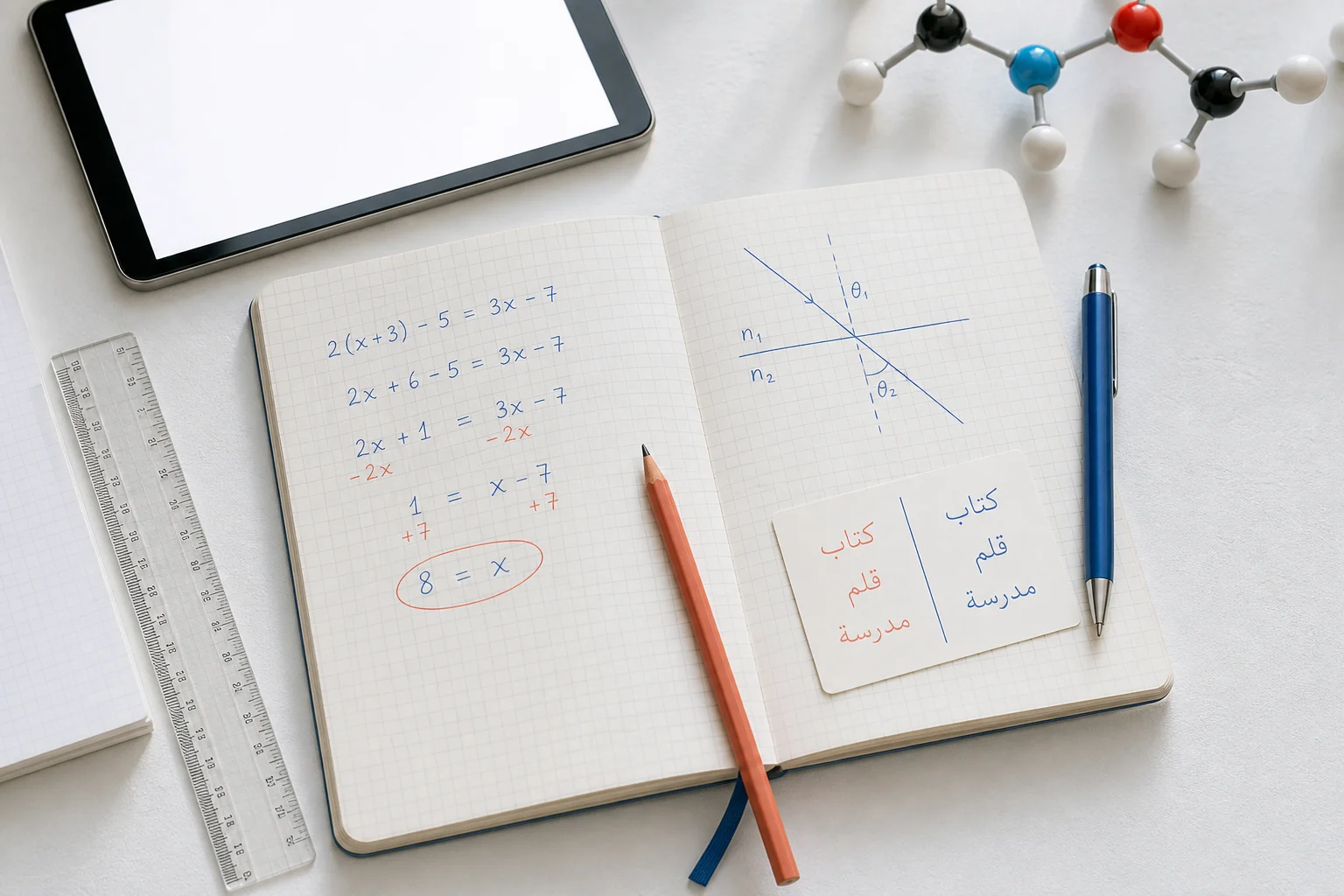
A rigorous academic approach, with close attention to how each learner understands and progresses.
Academic rigour with a human touch.
With a doctorate, Medjane Chahinez combines academic rigour with clear, patient and structured teaching.
Her experience in France, Belgium and Algeria informs an approach that respects different backgrounds and ways of learning.
Her teaching brings together conceptual understanding, regular practice and effective study skills.
- PhD
- Lessons from primary school to baccalaureate level
- Experience in France, Belgium and Algeria
- Mathematics, physics, chemistry and Arabic
Advanced online teaching methods
A session that keeps the student engaged
Each session keeps the student actively engaged and checks understanding throughout the lesson.
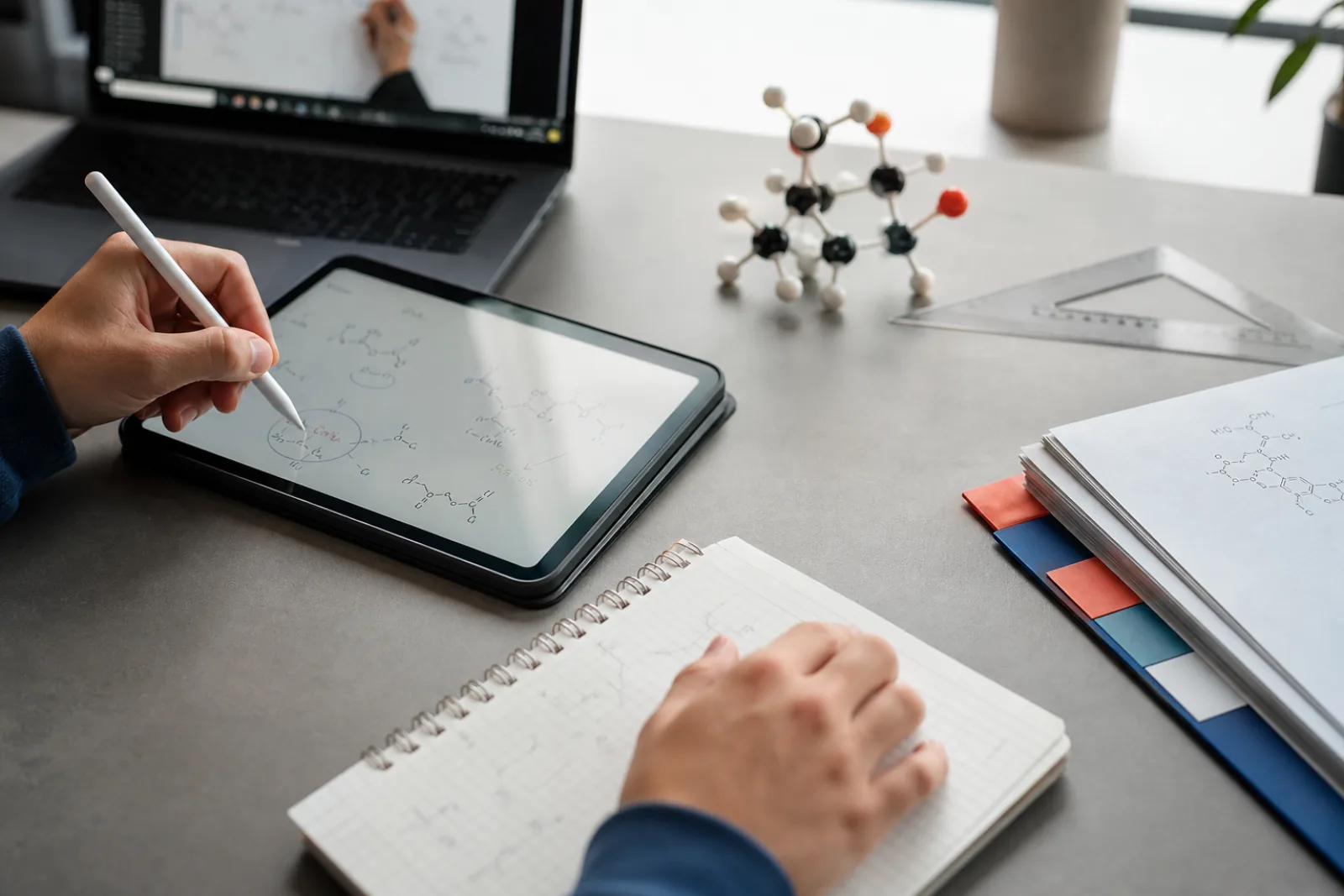
Prepare
Organised course materials, exercises and resources are kept together on Google Drive.
Participate
On Google Meet, exercises and dictations can be shared, reviewed and worked through together. Live tests can also be completed through Google Classroom.
Answer and review
Answers are reviewed during the session, with immediate feedback so that each step in the student’s reasoning can be revisited.
Track progress in real time
Attention and understanding are monitored during the lesson. An individual progress sheet then records what has been mastered and what needs further work.
Develop subject knowledge, practical skills and positive learning habits.
The support brings together subject knowledge, practical application, positive learning habits and a structured approach to study.
Get organised
Turn deadlines into clear and manageable steps.
- Use a planner effectively
- Manage time
- Prepare for an exam
Work attentively
Create the right conditions to follow, understand and communicate ideas.
- Develop attention
- Take clear notes
- Present written work carefully
Learn actively
Move from passive reading to active practice that puts new knowledge to use.
- Summarise lessons
- Master course material
- Use exercises and feedback effectively
Tracking example
See how progress becomes a clear next step.
After a lesson, qualitative tracking separates what is understood from what still needs practice.
Needs consolidation
Reasoning begins with support.
The student recognises the equation but still hesitates about which operation should come first.
Teaching example with no real student data or invented score.
Choose the setting that suits you
One-to-one and small-group lessons meet different needs while following the same structured approach.
One-to-one lesson
A session centred on one student’s pace, questions and goals.
- Pace adapted to the student
- Work focused on individual needs
- Personalised support
Small-group lesson
Students at a similar level progress together, exchange ideas and benefit from shared exercises.
- Groups formed by level and demand
- Active participation and discussion
- Shared goals suited to the group’s level
What kind of support might fit?
Answer four questions. The result stays on this page and does not replace an initial conversation.
What to know before getting started
Clear answers about subjects, formats and how online lessons work.
Who are the lessons for?
Mathematics, physics and chemistry lessons are for students from primary school to Baccalaureate level, depending on the subject and curriculum. Arabic lessons welcome French-speaking and English-speaking learners from beginner to advanced level.
What is the difference between a one-to-one lesson and a small-group lesson?
A one-to-one lesson follows one student’s pace and needs. A small-group lesson creates a collaborative learning environment for learners at a similar level. Groups are formed by level and demand.
What happens during an online session?
Sessions combine explanations, questions and exercises with real-time checks of understanding. Materials are organised on Google Drive, and tests may be completed through Google Classroom.
Is there homework between sessions?
Homework may be set to reinforce the material covered. Feedback helps students understand their mistakes and guides the next stage of their work.
How is progress tracked?
An individual progress sheet records what has improved, what has been mastered and which areas still need attention.
Are study skills included in the lessons?
Yes. Organisation, attention, note-taking, summarising, mastering course material, using feedback and preparing for exams are all part of the support.
In which language is Arabic taught?
Explanations are available in French or English and can be tailored to learners at beginner, intermediate or advanced level.
How can I request a first conversation?
Use the Book a video call button or send a request with the subject, level and preferred format.
An initial video call
Let’s talk about your goal.
Share the subject, level and preferred format so that the most suitable support can be identified.
Choose a time for your video call
Book a video call to discuss your needs and ask any initial questions.
Book a video callchahinezmedjane2017@gmail.com